You served them. You cannot reach them.
Every walk-in you do not capture is a customer you will have to buy all over again.
Start with a notebook, a till export or nothing at all.
Four everyday moments where a number is easy to ask for, one list that belongs to you, and a first message that earns the right to send a second.
Four places to ask
Ask, then earn it
The first step is a script for your staff. The rest runs itself.
Give a reason, not a form
Nobody hands over a number to stay updated. They hand it over for something specific that helps them in the next ten seconds.
Deliver before you ask for anything
The first message has to be the thing you promised. That is what makes the second one welcome instead of unexpected.
Be useful once, with nothing attached
One message with no offer in it at all. This is the cheapest trust you will ever buy.
Now the list is worth something
By the time you run your first campaign, these people know who you are. That is the whole difference between a list and a phonebook.
Who runs this
Any business where most customers arrive in person.
Where this stops working
Say what you will use the number for when you ask for it, and then stick to it. Under India's data protection law consent has to be informed, and people can withdraw it. Beyond the law, a list built by ambush unsubscribes the first time you use it.
Questions people ask
How do we get staff to actually ask?
Give them one sentence with a benefit inside it. Bill on WhatsApp works because it is faster for the customer too. Can I have your number for offers does not, and no amount of training fixes it.
Is a QR code not easier?
Easier for you, harder for them. QR earns its place where there is waiting time, like a table or a reception. At a busy counter, asking out loud collects more numbers.
We already have numbers in a notebook. Now what?
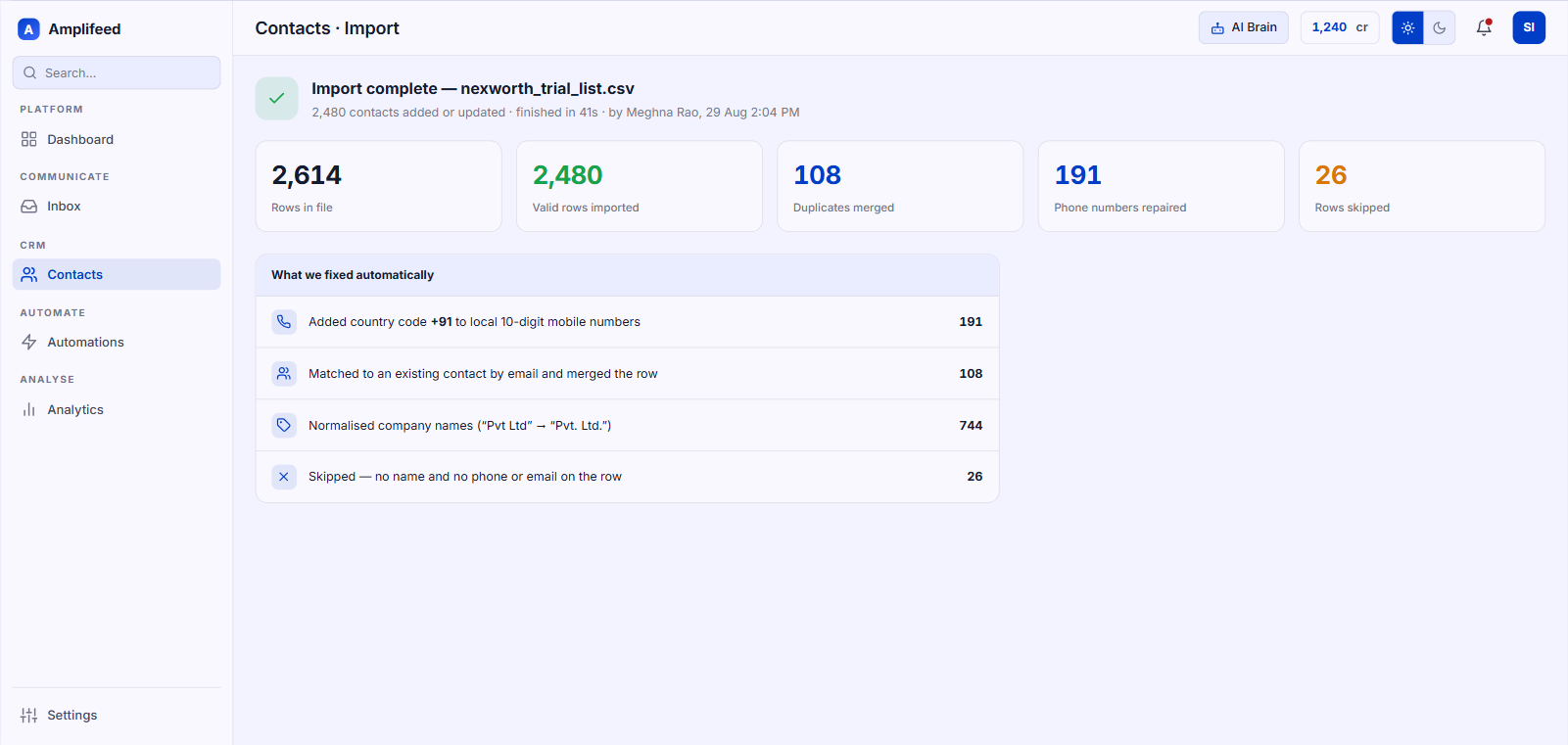
Import them. That is usually the first hour of setup, and it is also when you find out how many are duplicates or dead.
Start the list this week.
Bring whatever you already have, even a photo of the notebook. We will show you what it looks like once it is a list you can use.