It writes the follow-up. You press send.
It reads every conversation, finds the ones going quiet, and drafts the next message from that customer's actual history. Then it stops and waits for you.
Nothing reaches a customer until a person approves it
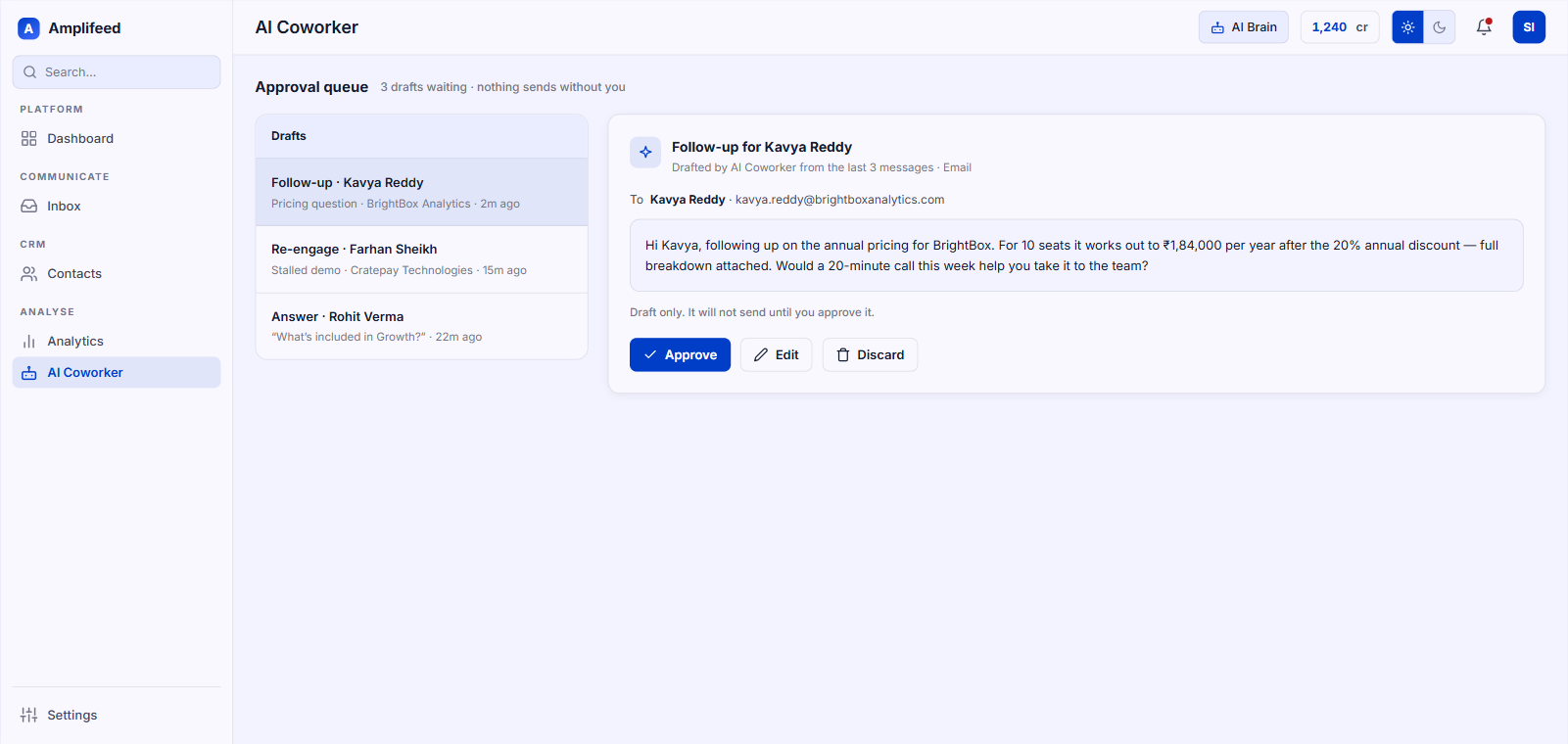
An AI teammate that spots the enquiries going cold, writes the follow-up in your words, and queues it for a human to approve, edit or bin.
What happens without it
What you actually get
The interesting part is not that it writes. It is that it stops.
It finds the cold ones
The enquiry that went quiet nine days ago, surfaced before you would have noticed.
It writes from real history
Drafted from the last messages on that record, not from a generic template with a name merged in.
It waits
Approve, edit or discard. Nothing reaches a customer until a person says so.
How it works
Point it at your record
It reads the conversations that already exist. There is nothing to train.
Read the first few drafts
Edit them, and it learns the way you write.
Approve in batches
Most people clear the queue in a couple of minutes each morning.
Where this stops
It drafts well when the record is rich and poorly when it is empty. If most of your customer history lives in conversations that never reached the platform, the drafts will be generic, and no amount of AI fixes a thin record.
Questions people ask
Will it message customers on its own?
No. It drafts and stops. Every message waits in a queue until a person approves it.
Does it sound like a robot?
It writes from the last messages on that record, and it adapts when you edit. The first week is worth reading closely.
What does it cost?
It uses AI credits, which are included on every paid plan with the allowance published on the pricing page.
Can I turn it off?
Yes, entirely, or per pipeline. Some teams run it only on leads over a certain value.
Works with
Watch it draft on your own conversations
Not a demo account. We point it at your real record and you read what it writes before deciding anything.